Case
How to turn market potential into focused growth choices? | Ruitenberg Ingredients case
The challenge: substantiating growth choices in complex ingredient markets
Specialized ingredient markets rarely come with neat, ready-to-use data. Market definitions differ, public information is fragmented, customer requirements vary by application, and competitive and regulatory conditions continue to evolve. This makes it difficult for food ingredient suppliers to build the fact base needed to determine ‘where to grow’.
Ruitenberg Ingredients is a company facing these types of challenges and questions. To substantiate strategic decision making, Ruitenberg Ingredients wanted to assess the growth potential of several product-market combinations. The company needed more than top-down market figures aiming to understand the size of the markets it could realistically serve, the developments shaping future demand, the criteria customers use when selecting an ingredient or supplier, and the best areas to build a meaningful competitive advantage.
The central challenge was therefore to combine external market attractiveness with internal capabilities. Hammer Market Intelligence was tasked to conduct a market research for Ruitenberg Ingredients that had to provide an evidence-based foundation for decisions on where to invest, which applications and geographies to prioritize, and how to win in the most relevant markets.
"Our goal was to have an objective quantitative and qualitative research available that would support us in defining and building our strategy process"
"The main reason to start this project was to get a better understanding of the market sizes of our current markets and the regional split. Next to that, it was important for us to get a better understanding of the developments and trends in our current markets as well as the buying arguments of our potential clients. Since standard market reports do not address our specific market questions, we opted for this approach."
Jasper Stavenga – Managing Director Ruitenberg Ingredients
The case: Ruitenberg Ingredients
Ruitenberg Ingredients develops value-added ingredient solutions for food manufacturers, with a strong position in meat, bakery, snack and plant-based applications. Its strength lies in creating customized solutions that combine functional product performance with application knowledge and co-development support.
Hammer assessed five product-market combinations across Ruitenberg’s portfolio, ranging from functional ingredients to filling solutions. Each combination operated in a different market context, requiring a consistent framework to compare opportunities and identify strategic priorities.
The approach: how Hammer translated market complexity into strategic direction
1. Defining the addressable market
In close collaboration with the experts of Ruitenberg Ingredients, Hammer first established clear market boundaries for every product-market combination. Relevant applications, geographical markets, product categories and substitution opportunities were identified and defined before any sizing took place.
This provided the crucial distinction of actual market and potential market. The actual market captured applications already using the relevant type of ingredient, whereas the potential market covered adjacent applications in which Ruitenberg's solution could realistically add value by fulfilling a function usually fulfilled by other ingredients. This created a commercially meaningful view of opportunity, providing more strategic insight than broad category totals.
2. Market sizing
Hammer developed a tailored market sizing model for each product-market combination. The analysis started with production volumes for relevant end-products and progressively narrowed these figures using:
· product segmentation,
· application-specific penetration rates,
· and ingredient dosage assumptions.
The market sizing models combined a broad range of evidence, including industry and regulatory sources, statistical databases, company and competitor information, and Hammer's ProductPulse, which is our AI-driven product database. On top of that, input from Ruitenberg Ingredients experts was essential to get a better understanding of the ingredients and to validate assumptions and methodological choices. This resulted in market figures at ingredient level, separating current demand and realistically substitutable potential.
The result was not one generic market number, but a complete overview by geography, application and ingredient use aligned with Ruitenberg Ingredients’ portfolio and definitions. By involving the people who had to work with the insights in the end, every stakeholder understood the assumptions and methods behind the data and the insights became actionable for future decision-making.
3. Understanding market dynamics and customer requirements
Market size alone is not enough to realistically determine market opportunities, therefore the quantitative analysis was complemented with desk-research and interviews with experts at current and potential customers to uncover market dynamics and competitive conditions.
For each product-market combination, the team investigated:
· Market growth, trends and regulatory developments
· Key customer buying criteria
· Strengths and limitations of competing solutions
These insights were translated into a clear buying criteria framework. They showed what customers value most: from product quality, taste and texture to cost-in-use, process compatibility and supplier service requirements.
4. Delivery: a ready-to-use strategic growth roadmap
Hammer consolidated the market sizing models, market dynamics and customer requirements in a practical strategic assessment for each product-market combination, leading to a final delivery consisting of:
· Transparent actual and potential market estimates at ingredient level
· Market growth forecasts and key trends and regulatory developments shaping demand
· Geographic and application-level opportunity assessments
· Buying-criteria frameworks based on direct market input
· A clear view of the product, service and supply-chain factors required to compete
· Concrete where and how to compete guidance for each product-market combination
This provided Ruitenberg with a consistent, fact-based foundation for portfolio choices, commercial prioritization and future investment decisions.
"The cooperation with the Hammer team was very constructive and pleasant. The team asked the right questions in order to get a true understanding of the business, was flexible when needed. Hammer makes effective use of interim evaluations to refine and sharpen the key questions, leading to more relevant conclusions. This significantly enhances the quality of the final report."
Jasper Stavenga - Managing Director Ruitenberg Ingredients
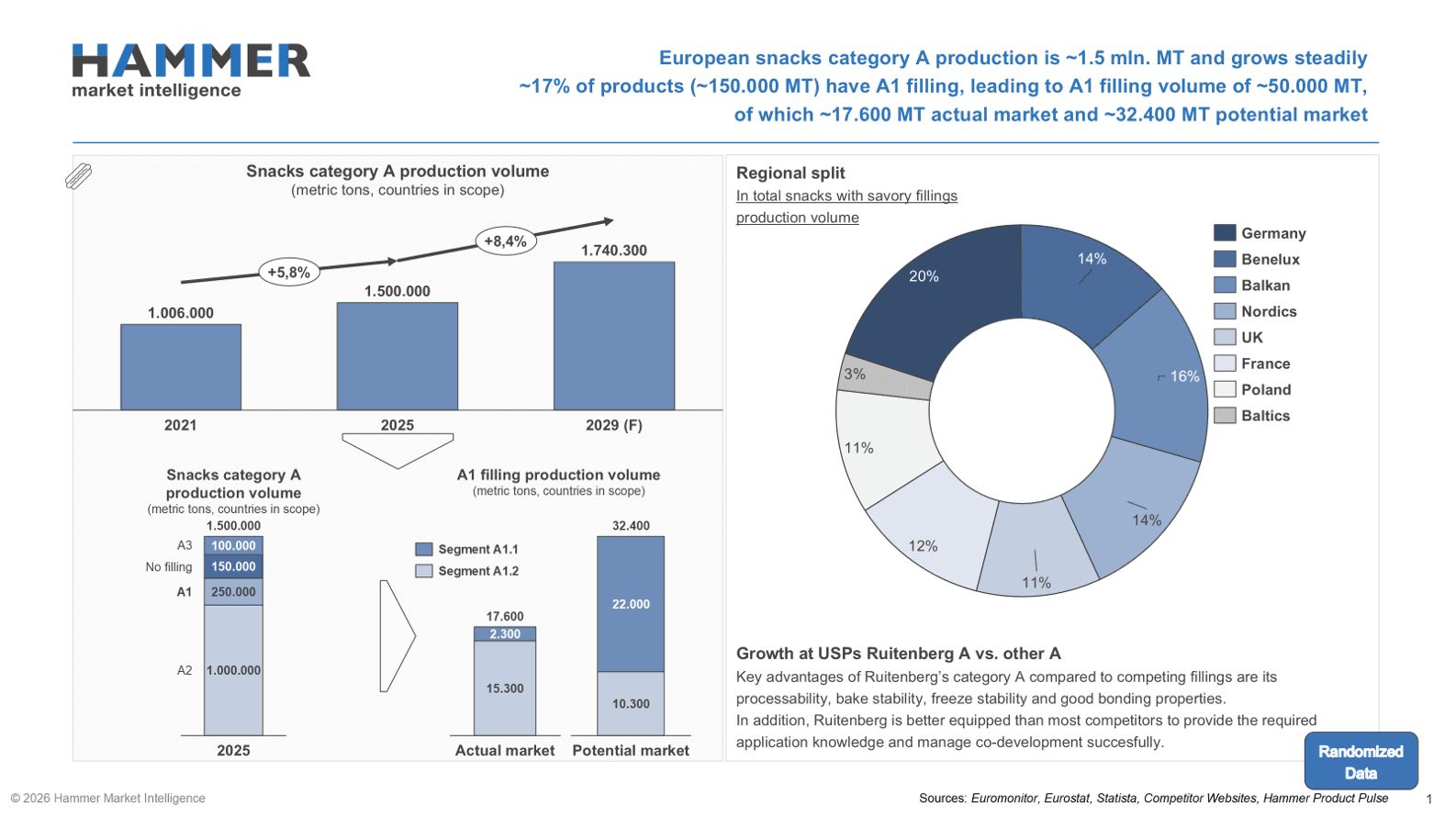
Figure 1. Example market sizing for an anonymized snack category with randomized data
The method: proven, tailor-made and continuously evolving
The Ruitenberg Ingredients project is exemplary of Hammer's work in Food (Ingredients) over the last decade, combining qualitative & quantitative market analysis, desk-research & expert interviews and advanced data science tools to assess complex and fragmented markets. Our approach is customized to deliver the required actionable insights to substantiate your specific strategic decisions.
This combination helps us build a robust fact-base and translate market potential into clear strategic priorities. Looking to size your market, assess growth opportunities or sharpen your strategic focus in Food or other B2B markets? Get in touch with Hammer via +31 85 3332472 or jasper@hammer-intel.com.

Turning market potential into focused growth choices in four markets

Turning millions of online conversations into actionable competitive brand intelligence